Through the projects that it supports, the Sommer Foundation aims to stimulate the minds of children and youngsters and make them more inquisitive so that they can participate in our society through the medium of culture and the arts. It encourages the creation of new forms of cooperation between partners from different communities and with different viewpoints, so that the people and cultures in Luxembourg may understand each other better.
Supported projects
 ©Pierre Weber
Theater an der Natur
2026
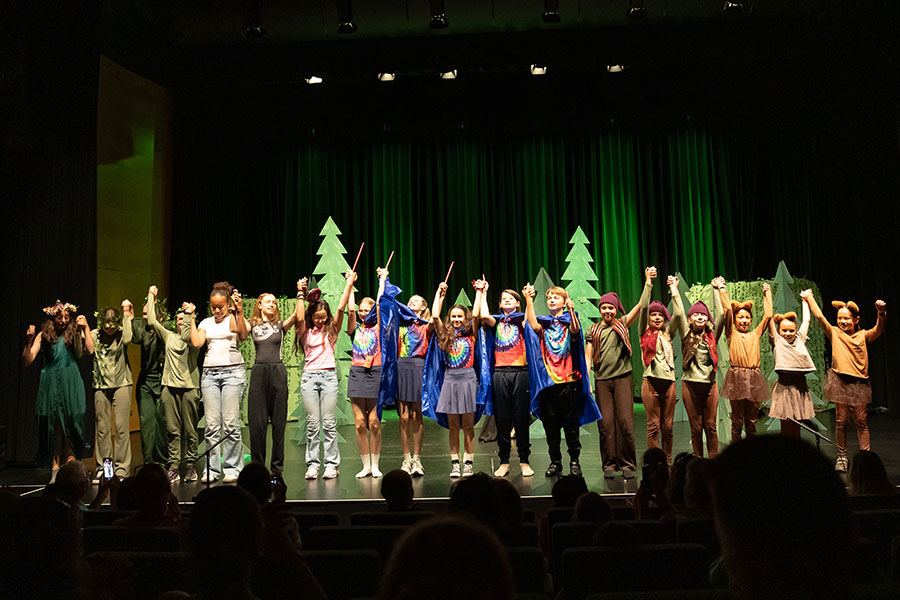
The ‘Theater an der Natur’ project, carried out by Kultrun asbl in partnership with the UGDA music school, took place between September 2025 and July 2026. During this period, 98 children from seven classes from the UGDA took part in four theatre workshops focusing on exploration, movement, voice and performance, before collectively devising a play. Inspired by Ursula Bertsch’s book ‘Wilma Walnuss und andere Heilpflanzenmärchen’, the story gradually took shape through the participants’ imaginations, guided by the actress Jennifer Kiessling. She put together seven different versions – one for each group – which were reviewed by the biologist and actor Lex Gillen to ensure the environmental themes were based on reality.
In total, seven performances took place at the SNJ Hollenfels Garden and at various venues in Bertrange, in front of families and friends who came to cheer them on. On stage, the children were able to express themselves through movement and voice, embody a character born partly from their own imagination, and create freely based on what they wanted to convey. Through the workshops and rehearsals, each child gained self-confidence, learnt to listen to themselves and the group, and learned to overcome their shyness.
 ©GaiaLux asbl
IDEE en Action
2026
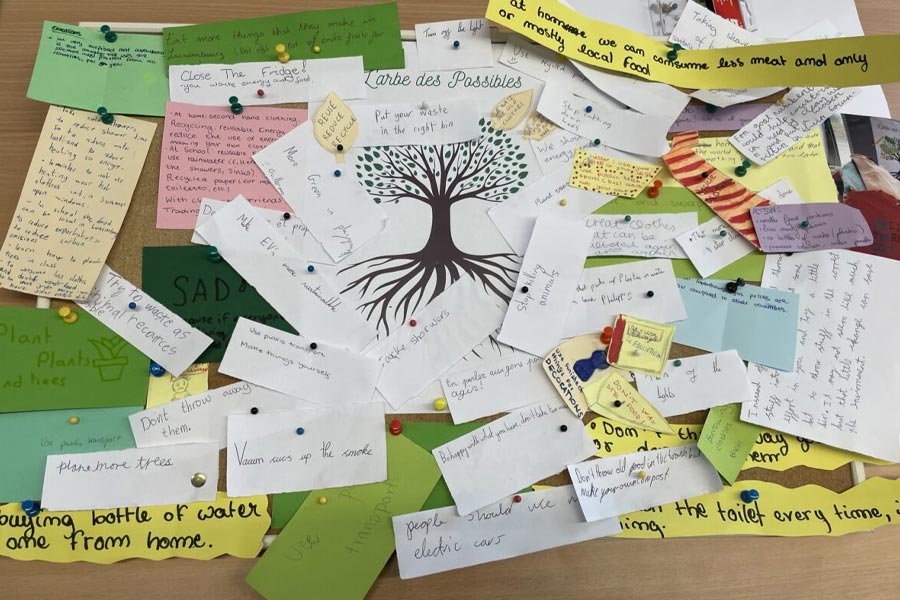
How can we discuss environmental issues with young people without causing concern about climate change? By focusing on hope, creativity and real-life experience. Jointly initiated by GaiaLux asbl and Kehsia asbl, ‘IDEE en Action’ transformed the touring exhibition on Sustainable Development Goals (SDGs) into a genuine educational platform. Somatic movement, eco-poetry, storytelling and active reflection circles took centre stage, sparking enthusiasm among students aged 12 to 18 and teachers who accompanied them.
This enthusiasm quickly spread beyond the pilot schools, the European School Luxembourg I and the Solina Youth Centre. Driven by growing interest from teaching staff and institutions, the project forged new partnerships with other secondary schools, whilst demand to host the exhibition and associated educational activities continued to grow. From a series of workshops, IDEE en Action has thus evolved into a genuine community initiative, taking the form of exhibitions, festivals and public events, from Eurostat to the Lët’z Refashion Concept Store, via LUGA and the On Stéitsch festival, driven by a growing number of young volunteers who chose to commit to the project beyond their initial involvement.
The project came to a close in June 2026 with a community celebration in Mamerhaff, bringing together local residents and partners to view the works created over the course of the year.

Vibrations Jeunes
2026
What if music became a way of learning about oneself? This is the challenge that the Réidener Jugendtreff took up, running regular music workshops for young people aged 12 to 20 from March 2025 to June 2026. The workshops covered singing, songwriting, performance and stage presence. The young participants were mentored by instructors such as Pascal Gualandris, Don Gio and Claudio Borri, and received constant support from the Jugendtreff’s educational team.
The project quickly expanded beyond the realm of music. Rehearsals became opportunities to discuss topics such as self-confidence, stress management, and emotional expression. The team tailored the workshops to the participants’ needs. By the time more than fifty sessions had been completed, around sixty young people had taken part in the project, including twenty-five who were involved from start to finish, right through to the group recording and production of a music video, which was shared on social media. Several initially more reserved young people went on to play a leading role in the group, gaining confidence and artistic initiative. The project even attracted young people who did not usually participate in the Jugendtreff’s musical activities.

Nikki Ninja - Educational Project
2026
What if hip-hop became a space for learning how to fall, and how to get back up? That is the aim of the Nikki Ninja project, which, over the course of twelve workshops from January to March 2026, brought together two classes with very different backgrounds, where fifteen nationalities came together in the same room. Guided by Nicole Bausch and Gilles Seyler, the thirty children explored the world of Nikki Ninja by writing their first rap lyrics, whilst tackling, in a light-hearted way, issues that affect them closely: the right to make mistakes, what they dream of becoming, and what their lives will be like in twenty years’ time.
The project wasn’t limited to writing: the pupils from Mersch designed their own costumes alongside costume designer Alexandra Lichtenberger, whilst those from Eich learnt the basics of graffiti with graphic designer Sascha di Giambattista. Two ways of discovering that creativity can also be a profession. A guided tour of Neimënster, where the stage and its technical backstage areas were revealed to them, rounded off this journey ahead of the album’s release in early June, followed by a tour of open-air performances across the country. Over the course of the sessions, lasting bonds of trust were forged, opening the door to discussions about what makes them feel sad, happy or angry. It is in this closeness that Nikki Ninja finds its uniqueness: helping each child to identify their own ‘super ninja power’.
 ©Ben Wagner, Mierscher Theater
Locker Room Talk
2026
What does it mean to be a man today? It is this question, born of a very personal reflection by the actor Jan Jaroszek following the birth of his son, that the Mierscher Theater has chosen to bring to the stage. Not as a thesis, but as an act of listening. Even before opening the stage’s ‘locker room’, the creative team, led by Jan Jaroszek, Therese Lösch and Romy Weyrauch, visited seven classes in five secondary schools across the country, where, in an atmosphere of trust, they gathered the young people’s views, doubts and lived experiences regarding masculinity and gender norms. It is these very voices, recorded and sometimes recognised by their own speakers in the audience, that form the raw material of the show, structured as a news feed made up of fragments and situations that echo one another.
This dialogue did not end with the final workshop session: the participating classes remained involved in the creative process right up to the premiere on 9 and 10 June 2026 at the Mierscher Theater, and the project will continue in the autumn with a conference and a round-table discussion open to the public. This initiative was carried out with the support of the Ministry for Gender Equality and Diversity and infoMann to ensure its pedagogical accuracy.
 © Mars Lépine
De Pierchen an de Wollef
2026
How can a classic musical tale be transformed into a genuine community project? In Hobscheid, the Harmonie Habscht and its young musicians from Mezzo Forté Bléiser have chosen to answer this question by involving the town’s two Cycle 2.2 classes in every stage of the creation of ‘Pierchen an de Wollef’, from May 2025 to March 2026. The children did not just prepare the show: they helped shape its visual identity alongside a professional photographer, from the logo right through to the puzzles and colouring pages handed out to the audience. On stage, the cast was expanded well beyond that of the original work so that as many children as possible, including those who did not wish to perform, could find a role.
Meanwhile, the young musicians of Mezzo Forté Bléiser built the set alongside a retired carpenter and made their costumes with a costume designer and a seamstress, discovering craft skills rarely associated with music in the process. The two performances, held in front of a thousand spectators at the Centre polyvalent de Hobscheid, revealed a newfound stage confidence among the children and their two young narrators.
Objets Migrateurs
2026
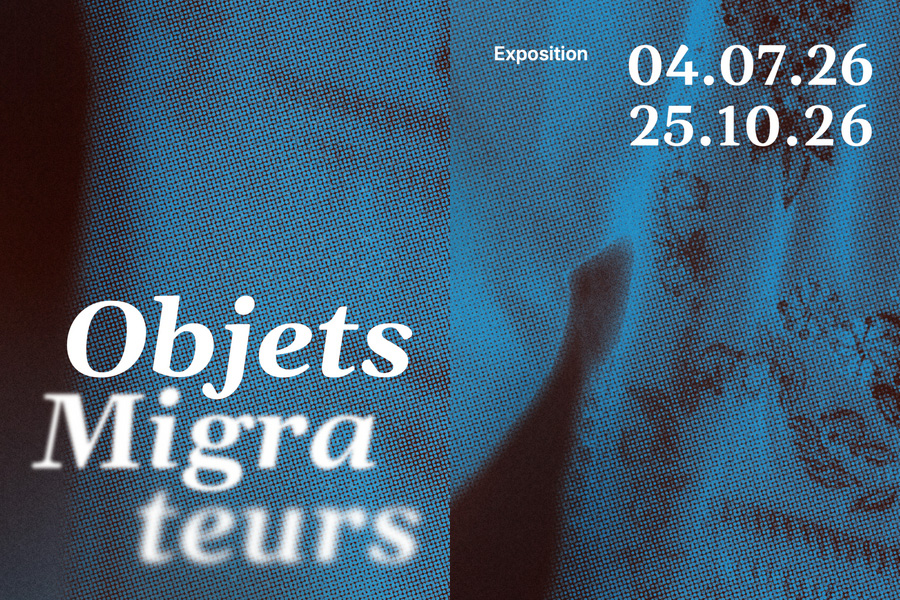
From October 2025 to July 2026, 17 students from class S5L2 at the École Internationale de Differdange, guided by the director and actor Serge Wolfsperger, delved into their own family histories of exile and migration. Drawing on personal objects, photographs and home films, they wrote autobiographical stories in their mother tongue, which were translated into French, before developing them further through theatre and film work inspired by Laurent Gaudé’s play ‘Caillasses‘. From writing to staging, via filming and commenting on their own footage, the students became narrators and spokespeople for family stories that had often remained hidden.
These intimate narratives, developed through a series of discussions, took shape in the exhibition ‘Objets Migrateurs’, which run for several months at the Centre de Documentation sur les Migrations Humaines (CDMH) in Dudelange, from the opening on 4 July until the closing at the end of October 2026.
Artelier
2026
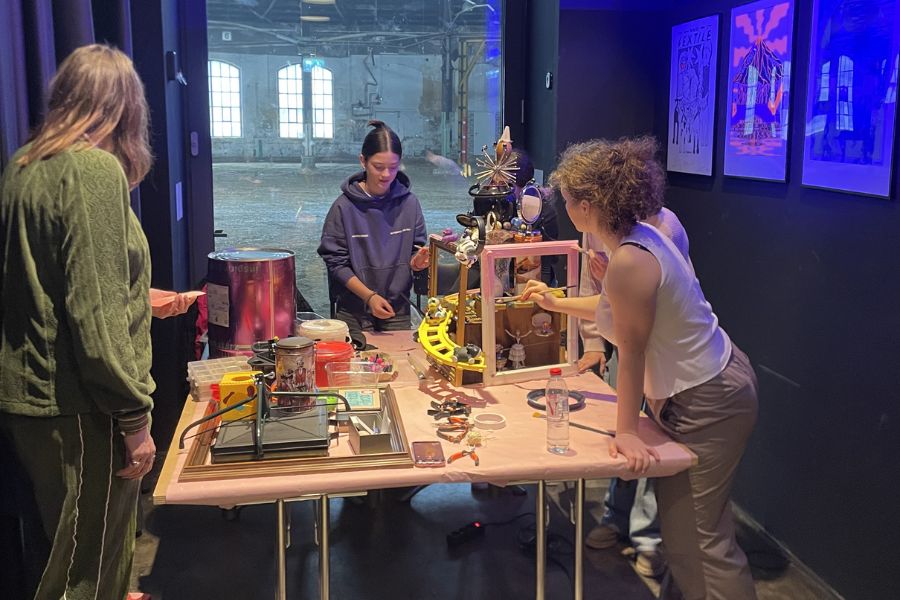
Artelier is a project conceived and organized by the youth collective F.O.M.O. (Friends Who Organize Magical Occasions), in partnership with Stayfou asbl. Held on January 24, 2026, at Les Rotondes under the theme “Rediscovering Winter’s Beauty,” the event offered a warm and inspiring day featuring a variety of creative workshops. Designed by young people for young people, the project aimed to make local culture more accessible, highlight local artists and initiatives, and strengthen community ties during the winter months. The program was a huge success: more than 190 participants took part in the event. The overwhelmingly positive feedback and enthusiasm generated by this open and participatory format have confirmed the value of this initiative, which fully demonstrates young people’s ability to conceive and carry out ambitious and unifying cultural projects.

AWA Platform — Vol. 4
2026
Bringing together the amateur and professional worlds of dance: this has been the mission of the AWA Platform since its creation in 2018 by choreographers Baptiste Hilbert and Catarina Barbosa. For its fourth edition, running from February 16 to March 1, 2026, the biennial brought together dancers from across the country and beyond, with workshops held at TROIS C-L and performances at Kinneksbond.
The professional masterclasses, led by international collectives such as VERONAL and Fighting Monkey, were fully booked every day. On the amateur side, the Platform continued the inclusive programme it launched in 2024, with workshops dedicated to the over-55s, young people and people with disabilities, led by the English dance educator Joel O’Donoghue. The highlight of this year’s festival was a new work by choreographer Anne-Mareike Hess with the CND Luxembourg Junior Company, which gave young aspiring dancers the chance to experience a professional creative process from the inside. Both the opening and closing nights, which featured eight pieces by emerging choreographers, were sold out.
Eloquentia - Je porte donc je suis
2025
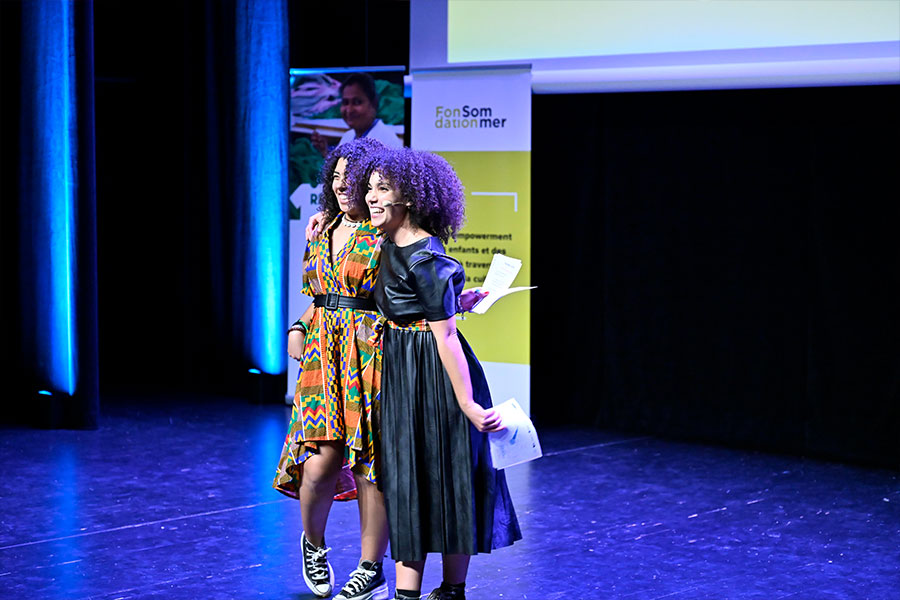
Public speaking, debating, persuading: these are just some of the skills that the Eloquentia programme helps Luxembourg secondary school students develop each year. For this second edition, held from 17 to 21 November 2025, ten groups from six secondary schools across the country came together for five days, guided by trainers from the Eloquentia association, to practise public speaking techniques. The novelty of this edition lay in its central theme: fair trade textiles. By partnering with the ‘Rethink Your Clothes’ campaign run by the NGO Fairtrade Lëtzebuerg, the competition, renamed for the occasion ‘I wear, therefore I think’, invited students to transform their questions about fashion and consumption into committed speeches. One hundred secondary school students learned how to deliver a message close to their hearts in front of an audience, culminating in the grand final organised on 8 December 2025 at Neimënster by the Institut français du Luxembourg, in front of 120 spectators.
Beyond the public speaking itself, a sense of group dynamic took hold: the students supported and encouraged one another throughout the workshops, with each participant gaining confidence as the others became more comfortable speaking. Supported by the Fondation Sommer since its first edition in 2023, alongside the Institut français du Luxembourg and the Association Victor Hugo, the project has been further enriched this year by a new partnership with Fairtrade Lëtzebuerg, a sign that the programme continues to evolve with each successive edition.
Archive
Load more